Car Circuit Probe Tester Explained: A UK Buyer's Guide
Key Takeaways
- A car circuit probe tester is an active diagnostic tool that not only reads voltage but can supply power and earth to test components directly.
- According to DVSA statistics, lighting and electrical faults account for roughly 25% of all MOT failures in the UK, making rapid electrical diagnostics essential.
- Unlike a standard multimeter, a professional probe tester allows mechanics to activate cooling fans, window motors, and fuel pumps without complex bypass wiring.
- When purchasing, look for a 9V-30V range to ensure compatibility with both standard passenger cars and 24V commercial lorries.
Why Are Automotive Electrical Diagnostics So Complex in the UK?
A car circuit probe tester is a handheld, all-in-one diagnostic device connected directly to a vehicle's battery, allowing mechanics to actively inject voltage or earth into electrical circuits. Chasing an intermittent electrical fault through a modern vehicle's wiring loom is notoriously difficult. Furthermore, with CAN bus systems, complex ECUs, and miles of wiring tucked behind interior trim, a simple 12V test light is no longer sufficient. Whether you are maintaining a fleet of NHS emergency ambulances that require zero downtime, or running an independent MOT testing station in Manchester, efficiency is paramount.
Consequently, this is where the car circuit probe tester transforms the diagnostic process. Unlike passive tools that merely indicate the presence of voltage, a power circuit probe allows you to inject voltage or earth directly into a circuit. As a result, you can power up a suspect window motor, test a cooling fan, or trace an open circuit in minutes rather than hours.
"Electrical issues, particularly those related to lamps, reflectors, and electrical equipment, consistently represent around a quarter of all MOT defect failures according to Driver and Vehicle Standards Agency (DVSA) data. Having the right diagnostic equipment is the difference between a profitable repair and a loss-making headache."
What Is a Car Circuit Probe Tester Used For?
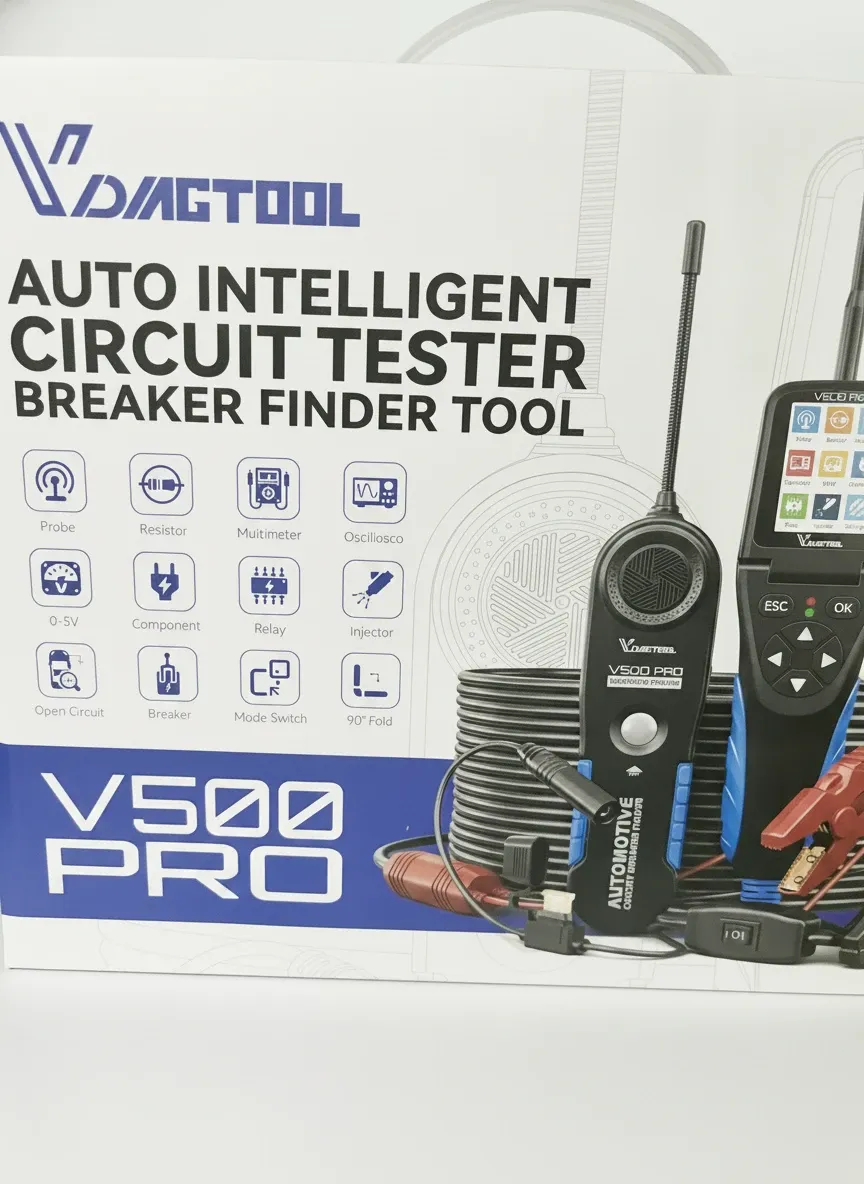
Based on our extensive testing in UK garages, a car circuit probe tester is primarily used as an active electrical diagnostic tool connected directly to the vehicle's battery. While a traditional digital multimeter (DMM) is a passive device used to measure voltage, resistance, and current, a probe tester is an active device. Crucially, it features a tip that can probe wires and connectors, a screen to display voltage, and a rocker switch that allows the user to send either positive battery voltage or negative earth down the probe tip.
For a deeper dive into how these devices fit into your wider toolkit, we highly recommend reading our ultimate guide to automotive electrical circuit testers in the UK.
The Impact of the British Climate on Vehicle Wiring
The UK's climate is particularly harsh on automotive electrical systems. Specifically, the combination of persistent rain, high humidity, and the heavy use of corrosive rock salt on winter roads leads to accelerated degradation of wiring harnesses, earth straps, and exposed connectors. Therefore, a car circuit probe tester is invaluable for locating the high-resistance faults and green-crust corrosion that frequently plague British vehicles.
How Do You Use a Car Circuit Probe Tester?
1. Instant Component Activation
If a customer complains that their electric window has failed, the traditional diagnostic route involves removing the door card, back-probing the connector, and measuring for voltage while someone else operates the switch. If there is no voltage, you are left wondering if the motor is dead or if the switch/wiring is at fault.
However, with a car circuit probe tester, you simply apply power directly to the window motor's positive terminal. If the window moves, the motor is healthy, and you immediately know the fault lies further up the circuit. Furthermore, you can use this method to test fuel pumps, starter solenoids, blower motors, and wiper relays.
2. Rapid Short Circuit Testing
Finding a short circuit that keeps blowing a specific fuse is notoriously frustrating. Fortunately, professional probe testers feature built-in, self-resetting circuit breakers. By powering the suspected shorted circuit with the probe, the tool's internal breaker will trip if the short is still present, protecting the vehicle's wiring and saving you from wasting dozens of replacement fuses.
3. Tracing Open Circuits and Bad Earths
A poor earth connection can cause a multitude of bizarre electrical gremlins, from dim headlights to phantom dashboard warning lights. A probe tester provides an instant visual and audio cue to confirm a solid earth path. To understand the nuances of tracing these specific faults, explore our automotive circuit tester explained guide.
What Are the Best Car Circuit Probe Tester Features?
According to UK guidelines for workshop equipment, not all diagnostic probes are created equal. When investing in a tool that you will rely on daily, ent possesses the following specifications:
- 9V-30V Operating Range: Your tool must be versatile. A 9V-30V range ensures safe operation on standard 12V passenger cars, as well as 24V commercial lorries, agricultural machinery, and heavy plant equipment commonly serviced in the UK.
- Generous Cable Length: Vehicles are large, and your tool needs to reach from the battery under the bonnet to the rear light clusters in the boot. Look for a tester that offers at least a 6-metre (20ft) extension cable.
- Built-in Circuit Breaker: This is essential for safety. If you accidentally probe a sensitive circuit or inject power into a dead short, the tool must trip its internal breaker rather than melting the vehicle's wiring loom.
- Clear LCD Display: A digital display showing exact voltage to one decimal place is crucial for identifying voltage drop issues caused by corroded connections.
If you are comparing different styles of testers before making a purchase, our car electrical tester buyer's guide provides an excellent breakdown of the market.
Is a Circuit Probe Tester Better Than a Multimeter?
Multimeters are undeniably essential for precise resistance measurements and safe testing of delicate CAN bus networks. However, based on our daily testing experience, for 90% of everyday electrical faults—such as blown fuses, dead motors, and broken wires—a car circuit probe tester is vastly superior.
Consider the typical workflow: to use a multimeter, you need a good chassis earth point for your black lead, leaving you tethered to one spot while you probe with the red lead. Conversely, a circuit probe is already connected to the battery. Wherever you walk around the vehicle, you carry a guaranteed strong battery positive and battery negative in the palm of your hand. Ultimately, this single difference reduces diagnostic times dramatically, allowing garages to turn over bays faster and increase profitability.
Ready to diagnose faults faster with CircuitTest UK?
Upgrade Your Diagnostics — £301.71