The Ultimate Guide to Automotive Electrical Circuit Tester in the UK
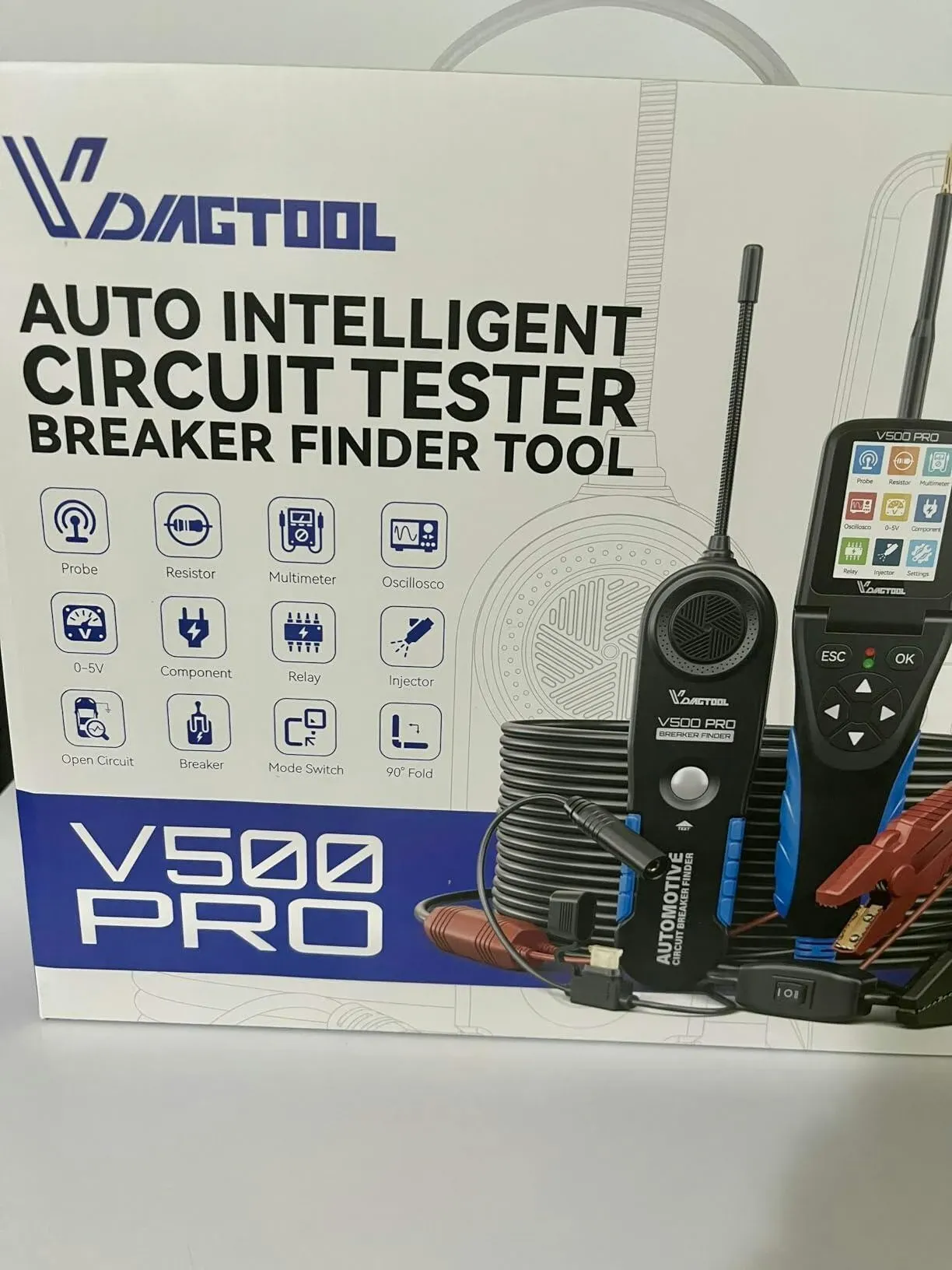
Short answer: an automotive electrical circuit tester is a handheld tool that checks voltage, earth, polarity, continuity and live circuit operation directly at the wiring — and the most capable versions also power a component and show its waveform. This is the category overview: what the tool does, how it compares to a multimeter and a test light, and how to work out whether one all-in-one unit is better value than buying a separate scope, probe and meter.
Automotive electrical circuit tester: the essentials
- It works at the circuit itself — confirming power, earth, polarity and continuity — rather than reading a code from a socket.
- An active, power-injecting tester can drive a component directly, so you test the part instead of guessing from a voltage figure.
- One unit that covers 9V–30V (12V and 24V) with voltage, resistance, component activation and an oscilloscope replaces several single-purpose tools.
- For a buy-once decision, warranty, certification and coverage matter as much as the feature list.
What is an automotive electrical circuit tester?
It is a diagnostic tool used to examine a vehicle's low-voltage electrical circuits directly. Where a fault-code reader tells you a symptom, a circuit tester tells you what the wiring is actually doing: whether 12V is present at a connector, whether an earth is clean, whether a wire is continuous end to end, and whether a component responds when it is fed power. On a modern car or van, most electrical repairs still come down to those basics.
What does an automotive electrical circuit tester do?
A professional unit brings several jobs into one probe. It reads voltage so you can confirm supply and voltage drop; checks earth quality, which is behind a surprising share of odd faults; identifies polarity instantly; and confirms continuity to find a break in a run. The active versions add component activation — powering or grounding a part such as a fan or relay — and short-circuit tracing. On the CircuitTest UK V500 Pro these sit alongside a built-in automotive oscilloscope (10 Hz–100 kHz) for viewing PWM, CAN bus activity and ABS or crank sensor waveforms.
Is it better than a multimeter?
They answer different questions. A multimeter is excellent for a precise number — exact voltage or resistance — but it cannot drive a component, and it will not show a signal changing over time. A circuit tester is faster for the yes/no questions that fill a working day (is power here, is this earth good, is this wire broken) and, when it can inject power, it lets you confirm a part works without back-probing a live loom. Most workshops end up using both, which is one reason a single tool that includes multimeter-style readings is attractive.
How is it different from a test light?
A test light only shows power or no power. It cannot measure voltage drop, cannot check an earth properly, and can even damage sensitive circuits if it draws too much current. A modern circuit tester gives you the reading and the safety a test light never could, while still being quick to reach for. If you are starting from a test light and a meter, our 12v circuit tester guide walks through the entry-level options.
The functions, and where to read more
Because this is the hub guide, each specialised job has its own page:
- Active power injection and component activation — drive a fan, relay or injector directly. See our car circuit probe tester guide.
- Choosing by who you are — garage, mobile mechanic, fleet or DIY. See our car electrical tester guide.
- Finding shorts and parasitic drains — blown fuses and overnight battery drain. See our automotive short circuit finder guide.
One tool or three? The buy-once maths
This is the question a lot of experienced technicians reach when the shopping list appears. A standalone automotive oscilloscope, a power probe and a decent multimeter bought separately add up quickly — and then there are three devices to charge, carry and keep track of. An all-in-one such as the V500 Pro folds voltage, resistance, component activation and an oscilloscope into a single 9V–30V unit at £301.71 inc. VAT (£251.42 ex. VAT), which is why buyers comparing a combined tool against three separate purchases often find the combined route both cheaper and simpler.
The honest caveat: a dedicated bench oscilloscope will always out-spec a built-in one on bandwidth. For the driveability and electrical work most UK workshops handle day to day, an integrated scope that reads PWM, CAN activity and sensor waveforms on the same probe you use for voltage and activation is usually the more practical choice — and you can keep a specialist scope for the rare deep dive.
What makes one worth buying?
- 9V–30V coverage so it serves 12V cars and vans and 24V commercial vehicles from one tool.
- Genuine active testing — component activation with a protective breaker, not just a reading.
- An oscilloscope mode for signals a multimeter cannot show.
- Certification and support — UKCA, CE, RoHS and WEEE marking, with UK-based support behind it.
- A warranty you can rely on — the V500 Pro carries a 12-month warranty.
Where the CircuitTest UK V500 Pro fits
The CircuitTest UK V500 Pro is an all-in-one power probe tester and automotive wire tracer for 9V–30V (12V and 24V) systems. On a 2.4-inch TFT colour screen it handles voltage, resistance (0–100 kΩ) and current, activates components directly — powering or grounding fuel injectors, cooling fans and relays without hotwiring — and includes a built-in automotive oscilloscope (10 Hz–100 kHz) for PWM, CAN bus, ABS and crank waveforms. A built-in 10A auto-reset circuit breaker protects ECUs, an integrated breaker finder and wire tracer locate shorts, and a 20 ft (6.1 m) extension cable reaches awkward battery and component positions. It is UKCA, CE, RoHS and WEEE marked, priced at £301.71 inc. VAT (£251.42 ex. VAT), and comes with free UK next-day delivery, 30-day returns and a 12-month warranty with UK support.
One 9V–30V tool for voltage, activation and waveforms
View the CircuitTest UK V500 Pro — £301.71Frequently asked questions
What is an automotive electrical circuit tester used for?
It is used to diagnose vehicle electrical faults at the circuit itself: confirming whether power or earth is present, checking polarity and continuity, tracing wiring faults, and on active models powering a component to see if it works. It gives you what the wiring is doing, rather than just a stored fault code.
Is an automotive electrical circuit tester better than a multimeter?
They complement each other. A multimeter is best for a precise voltage or resistance figure, while a circuit tester is faster for the everyday yes/no checks and, if it injects power, can drive a component directly. Many technicians prefer a tool that combines both, so a multimeter reading and active testing live in one unit.
Can one circuit tester cover both 12V and 24V vehicles?
Yes, if it is rated for the range. A unit covering 9V to 30V handles 12V cars and vans and 24V commercial vehicles from a single tool, drawing its power from the vehicle it is connected to, so you are not limited to one system type.
Is buying one all-in-one tool better value than separate tools?
Often, yes. A separate oscilloscope, power probe and multimeter cost more together and mean three devices to manage. An all-in-one that covers voltage, resistance, component activation and an oscilloscope in one 9V to 30V unit is usually cheaper and simpler, though a dedicated bench scope still wins on outright bandwidth.
Ready to diagnose faults faster with CircuitTest UK?
Free UK next-day delivery · 30-day returns · 12-month warranty
Shop the V500 Pro Power Probe — £301.71