Car Electrical Tester Explained: A UK Buyer's Guide
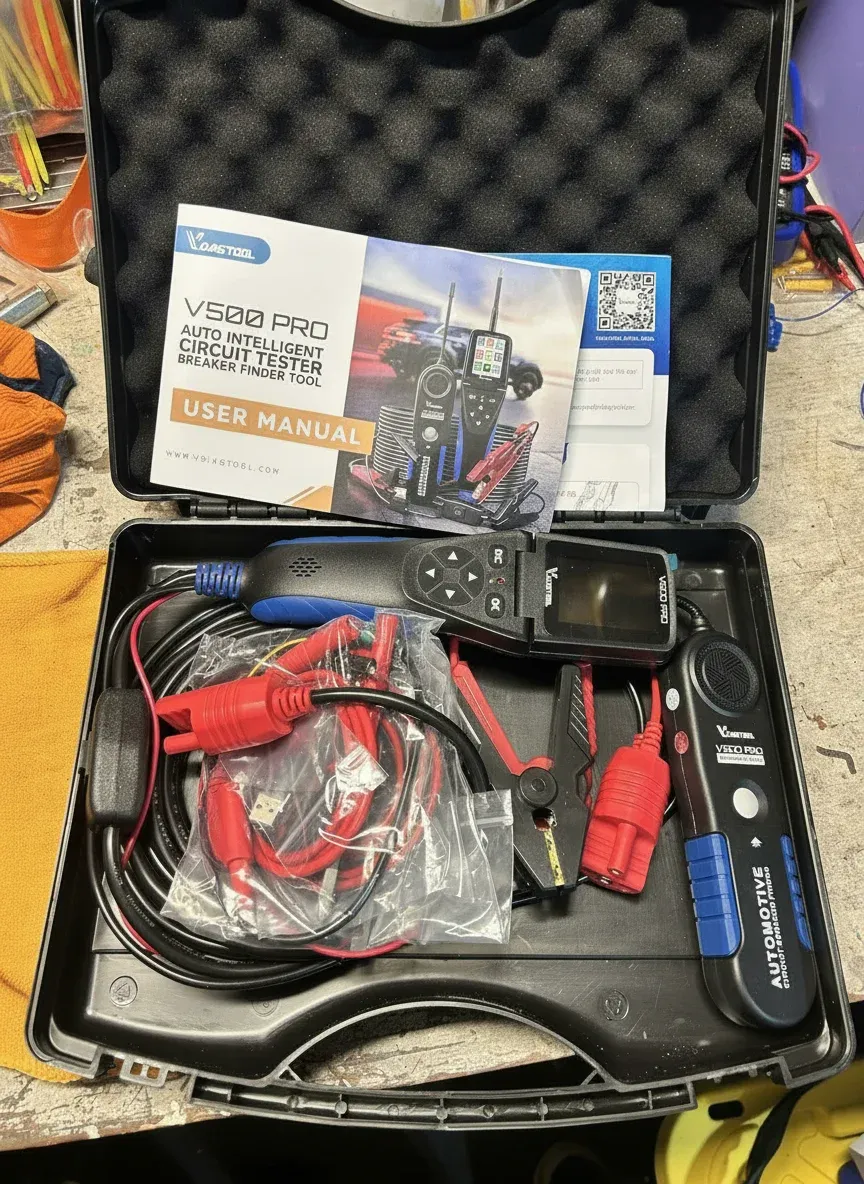
Car Electrical Tester Explained: A UK Buyer's Guide
Electrical faults are among the most time-consuming problems to diagnose on modern vehicles. A flat battery may be obvious, but intermittent wiring faults, failed switches, poor earths and inactive components can turn a simple job into hours of guesswork if you are relying on basic tools alone. A car electrical tester helps you pinpoint faults faster, verify voltage under load and check whether power is reaching the right part of the circuit.
For UK garages, mobile mechanics and serious DIY motorists, choosing the right tester matters. The best tool is not just about reading voltage. It should help you trace open circuits, activate components safely and work across the 9V-30V systems found in many cars, vans and light commercial vehicles. That is where an all-in-one automotive power circuit tester can offer a clear advantage over a standard multimeter.
Key Takeaways
- A car electrical tester is designed to diagnose vehicle wiring faults quickly and accurately.
- Advanced testers can do more than measure voltage; they can trace open circuits, check earths and activate components.
- For UK users, compatibility with 12V and 24V systems is important, especially for mixed fleets and vans.
- A quality automotive power circuit tester can speed up fault-finding compared with a standard multimeter in many real-world jobs.
- When buying, look for durability, clear polarity indication, circuit tracing, component activation and safe overload protection.
If you want a broader technical overview before buying, see The Ultimate Guide to Automotive Electrical Circuit Tester in the UK, which explains the wider category and where these tools fit into professional diagnostics.
What is a car electrical tester?
A car electrical tester is a handheld diagnostic tool used to test voltage, continuity, polarity, earth connections and electrical activity within a vehicle’s wiring system. Depending on the model, it may also allow the user to power components directly, trace breaks in wiring and verify the condition of switches, relays, lights, motors and sensors.
In practical terms, it is the tool you reach for when a vehicle has an electrical issue such as:
- Lights not working despite an intact bulb
- A starter circuit that is not receiving power
- A fuel pump or cooling fan that fails to activate
- An intermittent fault caused by a damaged wire or poor earth
- Blown fuses with no obvious cause
- Accessory circuits failing on cars, vans or light commercial vehicles
Unlike a simple test lamp, a more capable automotive circuit tester can provide far more diagnostic information. Unlike a multimeter, it is often quicker to use in live vehicle testing because it is designed around the realities of automotive fault-finding rather than general electrical measurement.
Why a car electrical tester matters in modern vehicle diagnostics
Modern vehicles contain increasingly complex electrical systems. Even conventional petrol and diesel models now rely on multiple control modules, sensors, relays and power distribution points. Add in start-stop systems, advanced lighting, heated seats, electric tailgates and driver-assistance features, and electrical diagnosis becomes a routine part of maintenance.
According to the Society of Motor Manufacturers and Traders (SMMT), the UK new car market registered more than 1.9 million new cars in 2023, with battery electric vehicle uptake continuing to grow year on year. Source: SMMT UK automotive market data. While high-voltage systems require specialist procedures, the wider growth in electronically controlled vehicles means low-voltage circuit testing remains a core workshop skill.
For technicians and experienced owners, the right tester reduces unnecessary parts replacement. Rather than swapping relays, switches or motors in the hope of curing a fault, you can test whether power and earth are actually present and whether the component responds when activated directly.
This matters for cost, efficiency and trust. A workshop that diagnoses correctly the first time is more likely to retain customers. A mobile mechanic who can identify an open circuit on-site can complete jobs faster. A capable DIY user can avoid replacing expensive parts unnecessarily.
How a car electrical tester differs from a multimeter
A multimeter is an essential tool, and every competent technician should know how to use one properly. However, a car electrical tester is often better suited to fast automotive diagnostics because it combines measurement with live circuit interaction.
Standard multimeter strengths
- Accurate voltage, resistance and continuity readings
- Useful for bench testing and component checks
- Good for confirming battery voltage and charging system output
- Widely used and versatile across many electrical tasks
Car electrical tester strengths
- Faster probing of live automotive circuits
- Immediate polarity indication
- Ability to trace open circuits
- Direct component activation in many models
- Quick checking of power and earth at connectors, fuses and switches
- Designed specifically for vehicle wiring systems
This is why many professionals use both. The multimeter remains important for precise readings, but a purpose-built automotive power circuit tester often gets you to the fault more quickly. For a more detailed comparison of these tools in the automotive setting, our Automotive Circuit Tester Explained: A UK Buyer's Guide is a useful companion read.
What a good car electrical tester should do
Not all testers offer the same functionality. If you are buying for serious workshop or roadside use, focus on practical features that improve diagnostic speed and confidence.
1. Test voltage across 9V-30V systems
This matters in the UK because many users work on both 12V passenger vehicles and 24V commercial vehicles. A tester covering 9V-30V gives useful flexibility for cars, vans and many fleet applications.
2. Identify polarity instantly
Clear positive and negative indication helps you confirm whether a circuit is supplying power or offering a proper earth path. This speeds up checks at connectors, fuse boxes and lighting circuits.
3. Trace open circuits
An open circuit can be one of the most frustrating faults to locate, especially where a wire has fractured inside insulation or corroded within a loom. A tester designed to trace circuit interruption can significantly reduce diagnostic time.
4. Activate components directly
This is one of the biggest advantages of an advanced probe-style tester. If you can safely apply power or earth to a component, you can quickly establish whether the component itself works. That helps separate component failure from wiring or control-side faults.
5. Check continuity and earth quality
Poor earths are a common cause of strange vehicle behaviour, including dim lights, intermittent operation and false fault symptoms. A good tester helps verify the integrity of grounding points and return paths.
6. Withstand workshop conditions
In real UK workshop use, tools get dropped, used in poor weather and packed into vans. Durability, robust leads and sensible overload protection are not luxuries; they are essential.
Who should buy a car electrical tester?
The short answer is anyone who regularly diagnoses vehicle wiring faults. The longer answer depends on how often you work on automotive electrical systems and how much time you want to save.
Independent garages
Independent workshops need to diagnose efficiently to protect labour margins. A car electrical tester helps technicians move quickly from symptom to root cause, especially when dealing with lighting faults, accessories, relays, fuse circuits and actuator testing.
Mobile mechanics
For mobile technicians, carrying a compact all-in-one tester is especially valuable. It reduces the need to switch between multiple tools and can help complete roadside or on-driveway diagnosis faster.
Auto electricians
Specialists dealing with wiring repairs, fault tracing and aftermarket installations benefit most from advanced functionality such as open-circuit tracing and direct activation.
Fleet maintenance teams
Businesses maintaining vans and commercial vehicles need tools that work across different voltage systems and support rapid turnaround. Downtime is expensive, particularly for delivery and service fleets.
Experienced DIY users
If you regularly work on your own vehicle and understand basic electrical safety, a quality tester can be a worthwhile upgrade. It is especially useful for older vehicles with recurring wiring faults and for owners fitting tow bars, auxiliary lights or other accessories.
How to choose the right car electrical tester in the UK
Buying the right tool is about matching features to the jobs you actually do. In the UK market, there are several practical points worth considering.
Vehicle coverage
Check the supported voltage range. If you only work on standard cars, 12V coverage may be enough. If you work on vans, transporters or mixed fleets, 9V-30V compatibility is a safer choice.
Use case
Are you mostly checking fuses and basic lighting circuits, or do you need to trace open circuits and power components directly? Buyers often under-specify at first, then end up replacing an entry-level tool once they realise how often advanced features would help.
Ease of use
A tester should speed up work, not complicate it. Look for clear indicators, intuitive controls and a design that is comfortable to use in tight engine bays and under dashboards.
Build quality
Workshop tools should feel dependable. Durable housings, quality probe construction and well-insulated leads are all signs that a tester is built for repeated professional use.
Safety features
Overload protection and safe operating design are essential. Users should always follow the manufacturer’s instructions and avoid using any tester outside its rated application.
Support and supplier credibility
Buy from a specialist supplier that understands automotive diagnostics rather than a generic marketplace listing with minimal technical information. Clear specifications, UK customer support and trustworthy product guidance all matter.
If you are comparing related tools and terminology, our Car Circuit Probe Tester Explained: A UK Buyer's Guide breaks down another common product category buyers often see when shopping.
Common jobs a car electrical tester helps with
To judge value properly, it helps to think in terms of jobs completed rather than just features on a box.
Lighting faults
If a headlamp, brake lamp or indicator is not working, a tester helps confirm whether voltage is reaching the socket, whether the earth is sound and whether the fault lies upstream in the wiring or switching.
Fuse and relay diagnosis
Rather than simply checking whether a fuse is blown, a tester can help confirm whether the circuit is live where expected and whether a relay output is actually feeding the load side.
Switch testing
Window switches, blower controls, boot release switches and similar components can be checked more efficiently when you can verify both supply and output behaviour in real time.
Motor and actuator testing
Cooling fans, washer pumps, central locking actuators and similar components can often be tested by direct activation, helping you establish whether the component itself is serviceable.
Broken wire tracing
Intermittent faults caused by damaged wiring in doors, tailgates and engine bays are common, particularly in older vehicles or hard-worked vans. The ability to trace open circuits can save significant time.
Earth fault diagnosis
Bad earth points can produce a wide range of odd symptoms. A dedicated tester helps identify weak or missing earth paths more quickly than guesswork or visual inspection alone.
UK buying considerations: compliance, safety and real-world use
In the UK, professional workshops are expected to work safely and competently around vehicle electrical systems. While a low-voltage automotive tester is a routine diagnostic tool, users still need to follow good workshop practice, manufacturer guidance and relevant health and safety procedures.
That includes isolating systems where appropriate, understanding the circuit before testing and taking extra care around hybrid and electric vehicles. Even where the fault appears to be on the standard 12V side, technicians should be aware of vehicle-specific service procedures.
For businesses, speed of diagnosis also affects customer service. If a vehicle is off the road and needed for school runs, care visits or NHS-related support travel, delays have real consequences. In fleet settings, every extra hour of downtime can affect operations and revenue. That is why UK buyers increasingly look for tools that help them diagnose faster rather than simply confirm faults slowly.
Why CircuitTest UK is positioned around faster fault-finding
CircuitTest UK is built around a clear workshop reality: technicians need a tool that does more than a standard meter when diagnosing live automotive circuits. The brand message, The Ultimate Automotive Power Circuit Tester, reflects a practical focus on speed, versatility and confidence in fault-finding.
The product approach is equally straightforward: trace open circuits, activate components, and diagnose 9V-30V vehicle wiring faults faster than a standard multimeter with a professional all-in-one diagnostic probe. For users dealing with real faults every week, those are not marketing extras; they are the capabilities that reduce wasted time.
This article is based on common automotive diagnostic workflows and UK buying considerations, drawing on established workshop practice and the features professionals typically prioritise when choosing a circuit tester. If you want a deeper technical foundation, revisit The Ultimate Guide to Automotive Electrical Circuit Tester in the UK for a broader view of tester types, use cases and terminology.
What to avoid when buying a car electrical tester
- Buying purely on price: a cheaper tool that lacks key functions may cost more in lost time.
- Ignoring voltage range: if you work on vans or commercial vehicles, make sure 24V systems are supported.
- Choosing generic tools with poor specifications: unclear ratings and vague feature lists are warning signs.
- Overlooking build quality: flimsy leads and poor probe construction rarely survive workshop use.
- Using the wrong tool for the job: a tester should complement, not entirely replace, a multimeter and proper diagnostic procedure.
Where to learn more before you buy
If you are still comparing options, these related guides will help you build a clearer picture of what to look for:
- The Ultimate Guide to Automotive Electrical Circuit Tester in the UK
- Automotive Circuit Tester Explained: A UK Buyer's Guide
- Car Circuit Probe Tester Explained: A UK Buyer's Guide
Together, these articles cover terminology, feature differences and the practical benefits of dedicated automotive testing tools for UK users.
Ready to upgrade your diagnostic toolkit?
If you want a car electrical tester designed to help you diagnose wiring faults faster, trace open circuits and activate components with confidence, explore the CircuitTest UK product range.
View the CircuitTest UK product page
For professional users and capable DIY mechanics alike, an all-in-one automotive power circuit tester can be one of the most useful additions to your electrical diagnostic kit.
Frequently Asked Questions
What is the best car electrical tester for UK buyers?
The best car electrical tester depends on your work. For professional or frequent use, look for a tester that covers 9V-30V systems, indicates polarity clearly, traces open circuits and allows safe component activation. For mixed car and van work in the UK, broader voltage compatibility is especially useful.
Is a car electrical tester better than a multimeter?
Not better in every situation, but often faster for live automotive fault-finding. A multimeter is still important for accurate readings and broader electrical testing. A car electrical tester is usually better for quick circuit checks, polarity confirmation, earth testing and direct component activation on vehicles.
Can I use a car electrical tester on vans and commercial vehicles?
Yes, if the tester supports the correct voltage range. Many vans and commercial vehicles use 24V systems, so check the specification before buying. A tester rated for 9V-30V offers more flexibility across UK vehicle types.
What faults can a car electrical tester diagnose?
It can help diagnose no-power faults, poor earths, blown fuse circuits, faulty relays, dead switches, inactive motors, lighting problems and open circuits in vehicle wiring. More advanced testers can also help prove whether a component works by activating it directly.
Ready to diagnose faults faster with CircuitTest UK?
Upgrade Your Diagnostics — £301.71